
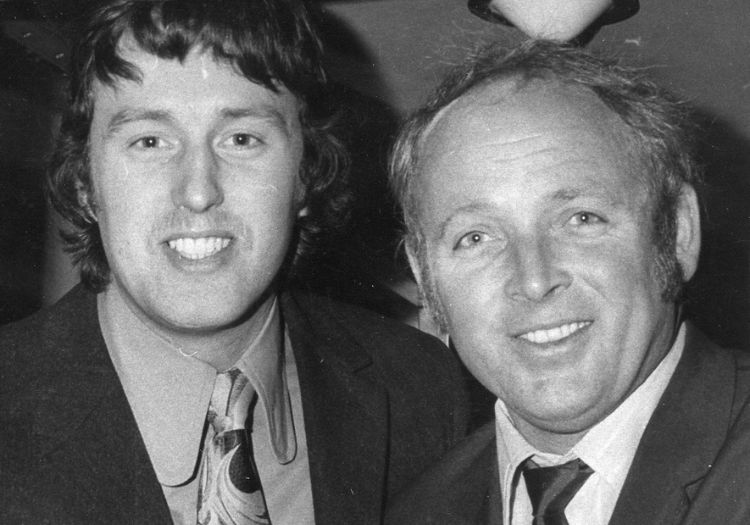
By Matthew Engel
Mike Carey, one of the most talented, versatile and prominent cricket journalists of his generation, died on Saturday (May 20), aged 87. The circumstances were traumatic: he was rescued after falling in the River Derwent near his home in Derby but was later pronounced dead in hospital. His eyesight had deteriorated in recent months and it is thought he lost his footing by the river bank.
This news was variously reported as “former regional journalist dies after river rescue” and “former Radio Derby presenter dies”. The headlines were not actually untrue but hardly do him justice.
In his heyday Mike Carey was the most admired and successful freelance on the county circuit, cutting a dashing figure when he arrived in his sports car. He wrote well and often wittily. On overseas tours, he was a regular member of the Test Match Special commentary team. He even became the host of the Sunday League coverage on BBC2.
Eventually he inherited arguably the most prestigious job in our business. In 1982, he was officially handed the mantle of E.W. Swanton to become cricket correspondent of the Daily Telegraph. His immediate predecessor was Michael Melford, who had been Swanton’s long-serving No.2, but it was still thought of as “Swanton’s job”.
And Carey represented a massive change. He was a grammar school boy, rooted in Derby, who seemed to represent a complete cultural revolution from the Swanton-Melford-MCC committee room axis. Rupert Murdoch had just bought The Times; The Guardian was the height of fashion; The Independent was not far over the horizon. The Telegraph sports pages were spacious and thorough but their approach had not altered much since Edwardian times and Carey might have been a major contributor to its modernisation.
Instead he left in 1986, in a manner as strange as his death 37 years later. He subsequently reported county games for The Independent but by the mid-1990s he left the cricket circuit forever and did indeed become a Radio Derby presenter — with a show called Memorable Melodies, focusing on the big band era of the 40s and 50s. It was very popular and lasted until 2019.
And he certainly started on his own local paper, the Derby Telegraph, a stint interrupted by national service in the army before he joined the legendary Derby-based freelance agency, Raymonds, where he began to command bylines on national sports pages before striking out in his own.
By the late 1960s he was writing sparky sports diaries in The Guardian while a new name began to appear in the Telegraph: “Henry Bevington”, which was an in-joke cod-name (Bevington = bevy, which came after he had filed). The Observer sent him on England’s horrendous 1974-75 tour of Australia, where he came up with the notion that England’s embattled captain, Mike Denness, had scored so many noughts that he ought to move to the Sydney suburb of Woolloomooloo. He is also credited with the wonderful description of a Yorkshireman: “someone born within the sound of Bill Bowes”.
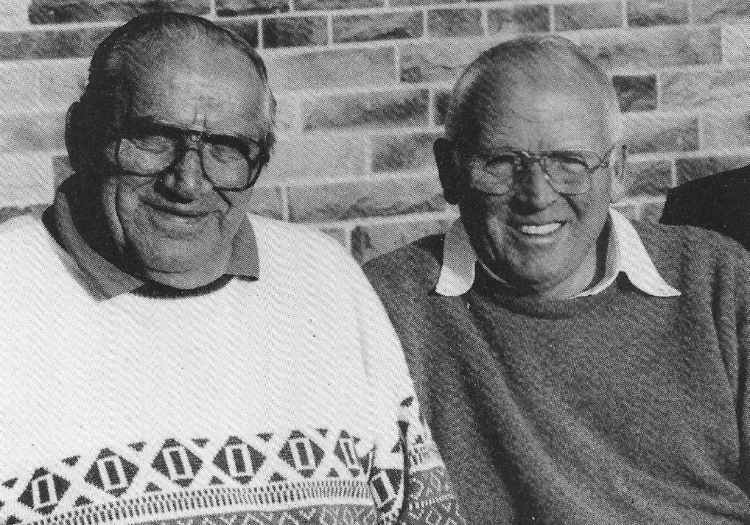
He was consistently funny in person and a fine colleague and companion. During a gap in the 1982-83 tour I hired a car with him and we had a magnificent three-day drive from Adelaide to Sydney via deepest Australia seeing our first wild kangaroo, our first dust storm and learned what happens in those parts when you don’t fill up with petrol (a kind stranger gets you out of the shit).
But by then – as Michael Carey not Bevington – he was allowing the Telegraph job to change him rather than him changing the Telegraph. “I’m writing for a retired colonel in Cheltenham,” he would say and then pass on his best bon mots to others, thinking he had to avoid them. He was always a fine judge of the game with excellent concentration but his free spirit deserted him.
In August 1986 there was a minor exchange of words involving Imran Khan and a drunk in the crowd at Worcester in a NatWest semi-final. The tabloids made much of it; the Telegraph suggested that Carey might include something. He told them he was the cricket correspondent not the drunks-in-crowd correspondent. This could and should have been a minor bump in the road but what happened next was worthy of Thomas Hardy. There was no communication between Carey and the sports editor, who thought he had resigned; Carey believed he had been sacked. And his name disappeared from the paper forever. “Sorry” really was the hardest word.
In his next phase, he trundled quite happily round the county circuit for The Independent, often accompanied by one or more of his beloved Labradors. Another blind spot was an inability to understand that not everyone else liked dogs as much as he did. Especially as his Labs were not all attuned to press box etiquette. This led to more fallings-out and a ban on dogs in press boxes. Finally, he fell out with The Independent.
To his old colleagues, he seemed reclusive and to the next generation of cricket writers barely known. But thanks to his radio show, which ran for nearly 20 years, he remained well-known round Derby – a father-figure to staff at the BBC station, full of tip-offs and bonhomie. They were awed by how much he knew, about his music and everything else. He umpired in league cricket and for many years pulled together a team of old mates to play Duffield CC and remained staunchly loyal to his local club, Darley Abbey.
There were many women in his life in his younger days, though he never married. He lived alone with his music and his large collection of old films and his last Lab, Max. When he became frail, he was nursed by his sister Joyce. And it seems he was contented, without regrets, which is all anyone can ask.
Mr Engel at his brilliant best, yet again.
What a shame about the circumstances, but a worthy send-off to Mr Carey from a master wordsmith.
Thankyou, Matthew, for a fine, well-judged reflection. It was a shock to hear this last night and such thoughts are always welcome.
RIP Mike
I Worked With Mike in the 1968-1970’s
At Raymond’s New Agency In Derby
He Was A Very Personable & Likeable Person