

By Paul Weaver
The argument is as old as cricket itself: who was the greatest all-rounder of them all – still Garry Sobers, surely? But the Cricket Writers’ Club have no such selection difficulties. Robin Marlar served the CWC as member, treasurer, secretary, chairman and president. No-one else has done that. He was, indisputably, our finest all-rounder.
Robin, who has died aged 91, wore more hats than a mad milliner, jauntily, colourfully and often with a cavalier’s fine feathers. Sometimes they were dislodged from his head, possibly by the recoil of the loose cannon that he was often seen to represent. But, until the end, he was one of the game’s outstanding personalities, his impatient intelligence lending a spark to his polemic and his eccentricity.
Those of us who had the good fortune to tour with him, especially when his wife, Gill, was around to keep his spleen in check, knew that he was immensely good company, at once genial and acerbic. There was an urge to gladden him, both to hear the generous roar of his laughter but also to avoid his caustic displeasure. His bite could be every bit as sharp as his wonderful bark – he was a professional headhunter after all – and his short temper when dealing with slow copy-takers brought him the press box nickname “Snarlar Marlar.”
First, there was the player, an aggressive off-spinner who took 970 first-class wickets at 25.22. He might have won an England cap, but there were many gifted rivals, especially Jim Laker, but others too, including Fred Titmus, Ray Illingworth, David Allen and John Mortimore.
He wasn’t much of a batsman, though he once hit five sixes and six fours in a thunderous innings of 64 against Australia in 1956. Famously, playing for the Rest of England against Surrey in 1955, he went in as nightwatchman and was stumped second ball – for six! He was protesting to his captain, Doug Insole, after being made to change back out of his evening clothes.
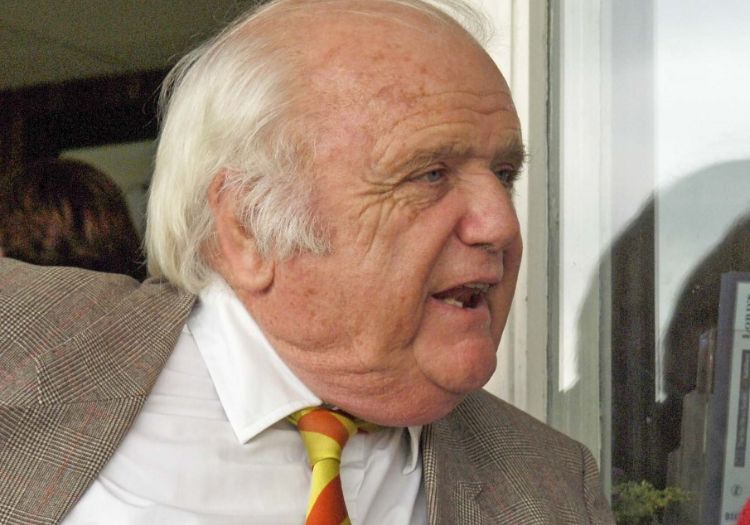
“As I was saying,” he said on his return to the pavilion, “I am not a nightwatchman.” He captained Sussex for five seasons, 1955-59. But he stopped playing in 1968, so it is as a journalist and administrator that most members will remember him.
At a time when Sunday and daily newspapers were less homogenised than today, Marlar provided Sunday Times readers with a vividly different read. He was the paper’s cricket correspondent between 1970 and 1996 and, when in tandem with the equally singular Peter Roebuck, the pages were impossible to ignore. In 1974 he demanded that the England captain, Mike Denness, should be sent home from Australia because of his team’s and his own dire performances. Much later, in 1993, he was the first to describe Shane Warne’s opening delivery to Mike Gatting as “the ball of the century.”
Like Ted Dexter, who succeeded him as Sussex captain, he attempted to become a Conservative MP in unpropitious circumstances. Dexter challenged James Callaghan in Cardiff; Robin contested the Labour stronghold of Bolsover. While playing for Sussex against Derbyshire he told the England fast bowler Les Jackson, who lived in the constituency, that he was counting on his vote. Jackson whistled one past Marlar’s nose and said: “That’s your answer!”
For all the bluster, Robin achieved a great deal. He became president of the MCC in 2005 and did much to promote cricket in Afghanistan and Bangladesh. Earlier, as chairman of his beloved Sussex, displaying energy and drive, he was one of the key figures in the revolution in the late nineties, which led to the most successful epoch in the county’s history.
Shortly after Sussex won their first county championship, in 2003, I had lunch with Robin and Gill at their then Guildford home. How did he feel about the title, I asked him? He beamed, and invoked Lewis Carroll
“Twas brillig. And as for Thursday and Friday, when the Jabberwock, the demon who stood between Sussex and victory, had been slain, ‘Oh frabjous day! Callooh! Callay! We chortled in our joy.’ We were champions at long, long last.”
One of my favourite stories goes back to a September afternoon in 2007, when he burst into the Sussex committee room, pale and shaking with anger.
“Why aren’t the flags at half-mast today,” he demanded.
“Um, why should they be?” came the bewildered reply.
Marlar fixed the committee man with an icy stare. “Don’t you realise that Pavarotti died today?” he shouted, before marching out, slamming the door behind him.